Skip to content
Home » Blog » Corporate Finance » Page 9

Corporate Finance

The Impact of Higher Interest Rates on Private Equity

    Increased interest rates have undoubtedly made the private equity landscape more complex and challenging.
    Leveraged buyouts, a common PE strategy, and high interest rates do not go hand in hand. With the increased borrowing costs, LBOs are significantly more expensive, making it harder to achieve the high level of returns that LPs expect.

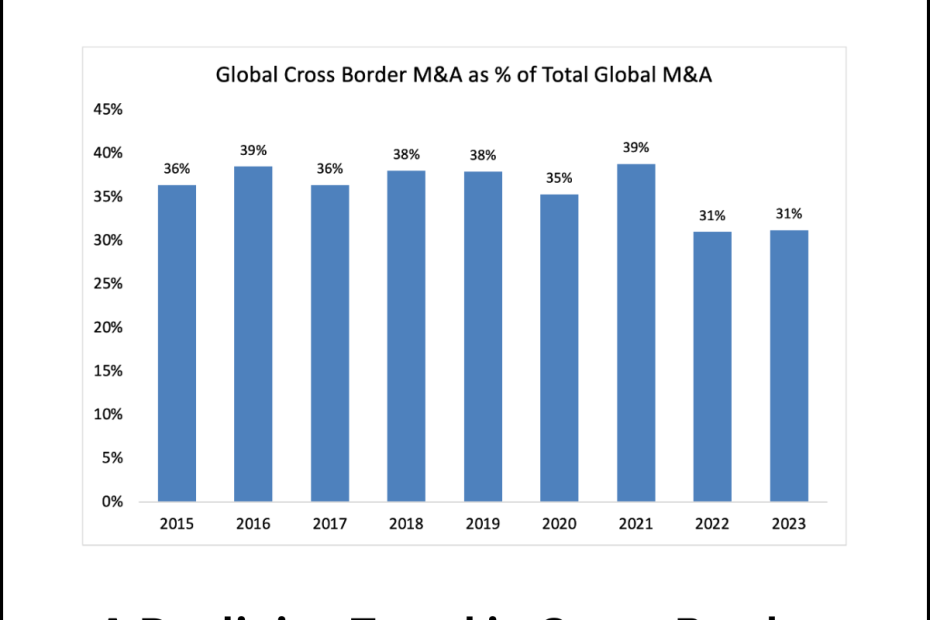
    A Declining Trend in Cross-Border M&A and Its Implications

      Cross-border mergers and acquisitions offer several benefits, such as market expansion, access to new technologies, and diversification of revenue streams. Given our European corporate finance advisory network, cross-border M&A remains an important part of our business and we are engaged in a number of cross-border transactions.

      Where to next for UK and European rates?

        Global markets have experienced the most rapid and aggressive rate hiking cycle of this century. Remarkably, global economic conditions have remained resilient. Labour markets have been robust, consumer spending has held strong, and we are yet to see anything meaningful in the way of defaults.

        Small- and Mid-Cap Take-Private Interest

          In the last year North American and European small- and mid-cap public companies attracted more interest from private equity investors than large-cap public companies.

          EU Cracking Down on “Greenwashing” in Fund Names

            Aalto Capital had the pleasure of attending the ESG Fintech Forum earlier this month, where some of the biggest ESG roadblocks were addressed, along with the role technology will play in transforming strategy. One of the many intriguing topics discussed was “Greenwashing,” the deceptive practice of marketing financial products as environmentally friendly or sustainable when they are not.

            Financial and Strategic Investors Find Common Ground

              The private equity and venture capital sector as a whole has seen a shift in recent years to a more hands-on approach.

              Increased competition between investors for quality companies and a less predictable and rapidly changing macroeconomic environment have prompted investors to be more involved in the businesses they invest in. Moreover, ESG campaigns and public pressure have also pushed investors to align their corporate views with those of their investments.

              Finding the advantage in a more crowded and complex investment market has become harder, and some investors are willing to invest in less ‘perfect’ companies given they can take on an active role in the business to steer them towards greater value creation.

              In many cases, this has made traditionally financial investors (PE, VC, family offices, etc.) take on many of the characteristics traditionally attributed to strategic investors. Most financial investors now offer both financial support and strategic advice as a way of winning deals and controlling the performance of their portfolios.

              Investors have taken steps to strengthen their industry connections and strategic networks, enabling them to offer more support to existing and potential portfolio companies, as well as to identify the best opportunities in the market. Moreover, many companies have come to expect investors to be able to provide value beyond a financial investment.

              The shift towards “doing it all” is, however, not just seen from financial investors. Strategic investors/acquirers have also taken a more flexible approach to their funding and M&A structures in recent years. Many corporates have built up corporate venture capital (CVC) arms, which in some cases operate practically independently of the core business, investing in companies only loosely related to the operations of the parent. In a number of cases, CVCs can invest without the explicit intention of acquiring the business for the long term.

              As a result, the industry is seeing a shift from both the financial and strategic directions towards a more active and flexible middle ground. This, in turn, means companies are benefiting from a more flexible investment landscape, where the “right” investor could come in a number of different forms.


              The Rise of Megafunds: How Large Players Are Dominating Private Market Fundraising

                Recent data reveals a notable trend in private market fundraising: the increasing concentration of capital among a few large players. According to the Q1 2024 Global Private Market Fundraising Report by PitchBook, the total capital raised in the first quarter was comparable to the previous year; however, the number of funds has dropped significantly, with a 45.9% decline year over year. Notably, funds valued above $1 billion accounted for 81.2% of the total capital raised.

                Private Equity Fundraising is Making Modest Strides

                  Just as many growing companies seek investment from private equity funds, those funds must find investors themselves in the form of limited partners (LPs). Fundraising volume is therefore a strong proxy for the level of overall private market investment activity.